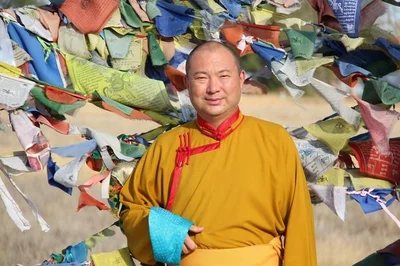
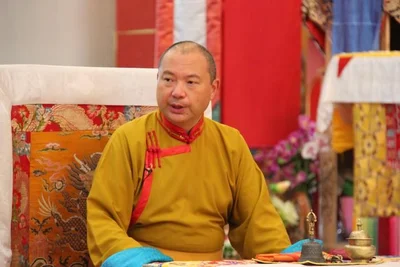
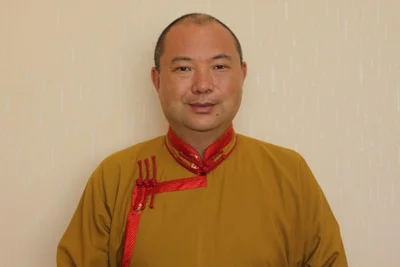
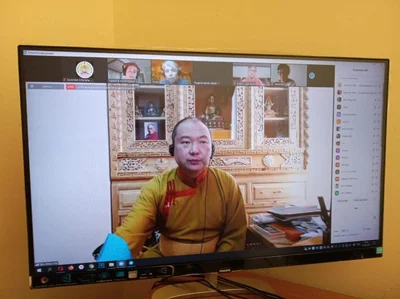
The Shajin Lama of Kalmykia on the Coronavirus and Methods of Overcoming the Pandemic
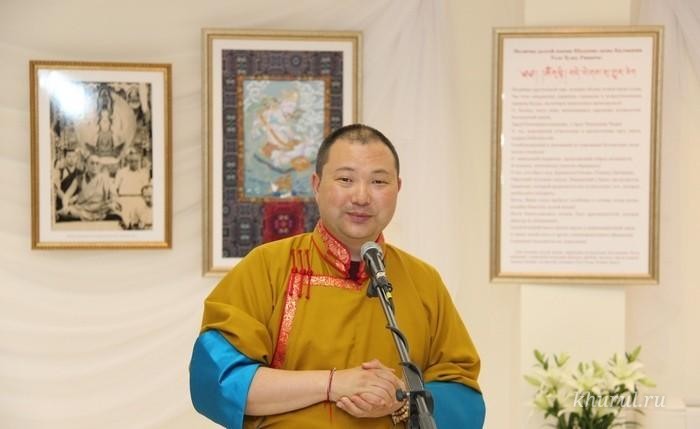
Rinpoche la, during the pandemic some people lost their jobs, some died, some fell ill, and many people are experiencing very strong mental suffering. There is also a great deal of stress, a great deal of an unsettled state of mind. In this connection, what advice could you give people? How can they get through this difficult period? What Buddhist methods or tools might exist to calm one’s mind and get through this period well? How can one look to the future with optimism? Since we are all going through a very difficult period now, the period of the so-called pandemic, we of course experience colossal stress and uncertainty about tomorrow. This pandemic descended upon us suddenly, unexpectedly, and, unfortunately, due to its broad scale — not only at the level of individual states but also at the international level — one may say that it has become a real catastrophe for the whole world. I know that it is very difficult for many people to be in conditions of self-isolation or quarantine, for it has already lasted not one day and not one week, but several months. I am quite often asked the question: when will this pandemic end? When will we return to normal life? Personally, I doubt that our life will again become the same as before. Nevertheless, we can try, make an effort, to normalize the situation. To best cope with the pandemic, keep your optimism and, most importantly, please observe the guidelines that the specialists speak of. Keep physical distance — personally I do not like the term “social distance,” I prefer the term “physical distance”; wear protective masks; wash your hands and observe the guidelines that are known to everyone. In my opinion, following the guidelines is very, very important both for your personal safety and the safety of your family, and for the safety of all of society. If we follow the guidelines, we will undoubtedly be able to prevent a further surge of infection with the Covid-19 virus. I know that many specialists, doctors, nurses, and a multitude of healthcare workers are risking their lives for our safety. My thoughts and prayers are with all who are now on the front line of the struggle, who are risking their lives, risking themselves, to save us, to save other people. From the bottom of my heart I express gratitude, express appreciation to all medical workers. I wish you, your relatives, and your loved ones health, I pray for your well-being and safety. I believe that now all of us need to strictly follow the guidelines issued in connection with the pandemic. This is very, very important. Of course, we Buddhists continue to pray. Members of the Sangha pray not only in some one country, but throughout the world, across the whole planet. All Buddhist monks and nuns perform many rituals, many prayer services. But again, I never tire of repeating that prayers and rituals alone cannot remove the obstacles we encounter in daily life. It is very important that people themselves observe precautionary measures in order to avoid the spread of this virus and cope with the pandemic. I sincerely ask all of you to be careful, to take care of yourselves, to look after your safety, the safety of your family, and of all of society. It is also not easy and even quite difficult for me to live in conditions of the pandemic, since I am accustomed to communicating with people face to face. And now, unfortunately, I cannot meet with many friends, acquaintances, and with the public in general. Nevertheless, I am confident that the pandemic will subside and a time will come when we will be able to see and speak with one another. I hope for a speedy meeting. I sincerely pray for all of you. I want once again to ask you — take care of yourselves. How can one cope with the pandemic on an emotional level? This is a very difficult question and a difficult task. I know that during this period many have lost their jobs. For many this period has become a time of agonizing uncertainty — they do not know what will happen in the future, what tomorrow holds for them. I invariably call on people to keep their optimism. We are obliged to be optimists, despite the circumstances that have arisen, despite the difficulties we face, however difficult the current period of our life may be. We are obliged to keep hope, we are obliged to look to the future with optimism. Looking back at our history, in particular at the 20th century, we will see how many difficulties we lived through, how many hardships fell to our lot in the sphere of politics, economics, spirituality, and other spheres. We experienced so much suffering, so this is far from the first time. In the past there was so much bloodshed, so many wars, the First World War, the Second World War, unceasing political crises, crises of local economies, of the global economy, and so on. Yet despite this we still keep our optimism, we still nurture hope. Therefore I think the most important thing is never to give up, to be true optimists and to invariably believe in a better future. I ask all of you to think in this way. The fear we experience can be overcome with the help of meditation, with the help of breathing exercises, analytical meditation, reflection on love and compassion for all living beings without exception. We should regularly practice mindfulness, awareness, and alongside this also generate and cultivate the so-called bodhichitta. From a Buddhist point of view, it is very important to be filled with bodhichitta in order to cultivate and sustain the aspiration to overcome all the emotional problems, the emotional crisis, that we have encountered. I ask all of you to keep hope and believe in a bright future. To care not only for ourselves, but also for our children, the younger generation, since they are the future of our people, our country, and the whole world. Therefore we must remain healthy both mentally and physically not only for our own sake, but also for the sake of our relatives, our loved ones, for the sake of our society, for the sake of our country, and so on. Now I would like to make a request to all of you: please, take care of yourselves, cultivate bodhichitta, direct this enlightened attitude not only toward yourselves, but also toward other living beings. — And in closing, Rinpoche la. What would you like to wish those who see this interview? Perhaps there is something you would like to say as an honorary representative of His Holiness the Dalai Lama, as the Shajin Lama of Kalmykia? Perhaps there are some words, thoughts in closing? In closing I would like with all my heart to pray for all of you. We Buddhists, at the very beginning of every prayer, generating bodhichitta, always cultivate compassion, love, and kindness toward all. There is a prayer called “The Four Immeasurables.” Reciting it, we think: “May all living beings be free from suffering and the causes of suffering. May all living beings be happy and not be parted from the causes of happiness.” I recite this prayer daily. In closing this interview I would like to offer prayers, sincere prayers, that all of you be happy, to wish you prosperity, success, and development, to wish that all of us acquire the knowledge and wisdom that will help us overcome any obstacles and difficulties arising in daily life. We are all human. We all face difficulties — this is unavoidable. But such is the reality in which we live. One must look reality in the face, one must accept this reality. However, the future is in our hands. Whether or not we will be able to create the ground for the reality we desire in the future is not so important. Far more important is to labor and make efforts, to do everything possible for this. I wish all of you boundless happiness, success, and prosperity. — Thank you very much, Rinpoche la, for answering the questions, for this interview. I think that your opinion, your position, are very important for the Kalmyk people, because you are not only the spiritual leader of the Kalmyk people, but also an Honorary Representative of His Holiness the Dalai Lama. Thank you.