Russian Buddhists Discussed Organizing the Visit of the 14th Dalai Lama
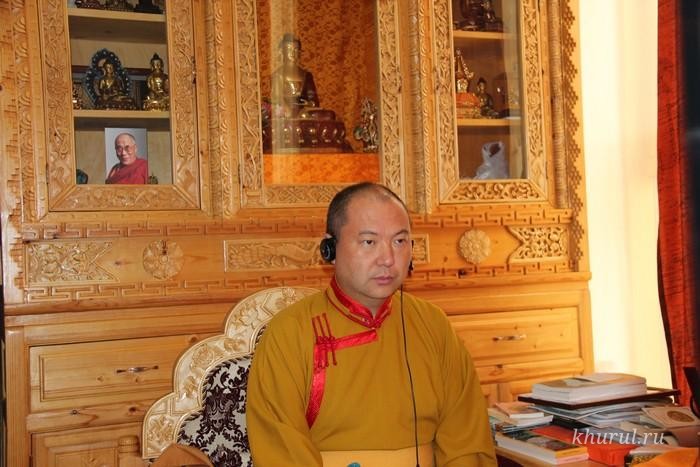
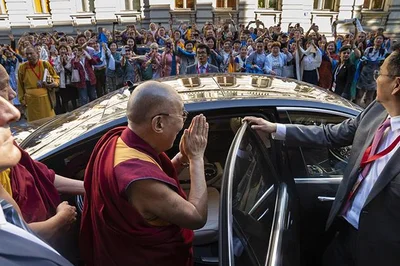
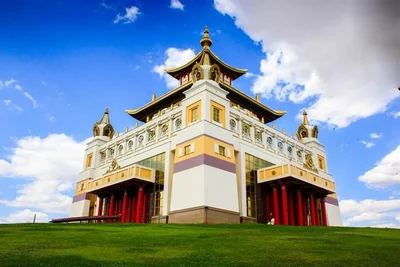
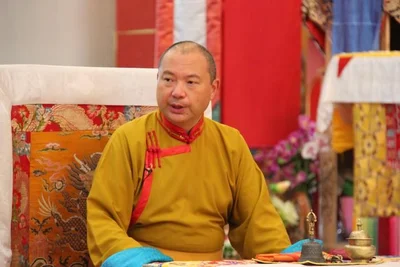
Last week, for the first time, an online conference of Buddhist organizations of Russia took place. On the conference agenda were two main issues: the visit of His Holiness the 14th Dalai Lama to Russia and the introduction of amendments to the federal law “On Freedom of Conscience and Religious Associations.” 28 organizations took part in the conference, representing the four schools of Tibetan Buddhism — Sakya, Nyingma, Kagyu, and Gelug — from regions that traditionally profess Buddhism — Kalmykia, Buryatia, Tyva — as well as from Moscow, St. Petersburg, Siberia, and the Far East. The initiator of the conference was the Association of Buddhists of Kalmykia. Earlier the Buddhist organizations of Kalmykia held their own regional online meeting on these issues, and a decision was made to hold an expanded meeting with Russian Buddhist organizations to consolidate efforts to organize the pastoral visit of His Holiness the Dalai Lama to Russia and to discuss other pressing questions. A brief report on the first issue was given by the senior administrator of the Central Khurul of Kalmykia “The Golden Abode of Buddha Shakyamuni,” member of the Civic Chamber of the Russian Federation Yonten Gelong (secular name Sergey Kirishov), who had earlier raised this pressing problem of Russian Buddhism at a session of the Commission for the Harmonization of Interethnic and Interreligious Relations of the Civic Chamber of the Russian Federation. [More: http://savetibet.ru/2020/07/23/dalai-lama.html]. According to Yonten Gelong, the last time the Dalai Lama was in Russia was 16 years ago, when he visited Kalmykia on a pastoral visit. (In the two other traditional Buddhist regions, Buryatia and Tyva, the spiritual leader has not been since 1992, that is, already 28 years.) Over these years, in his opinion, people have developed a firm notion that organizing the arrival of the Dalai Lama in Russia is not possible, but this does not correspond to reality. “The solution to this issue lies in the consolidation of our efforts. If, having united, the Buddhist organizations of Russia can convey their position with reasoned arguments to the government of the Russian Federation, the president, and the Ministry of Foreign Affairs, then we will be able to achieve a visit of the spiritual leader of the Russian Buddhists to our country,” he noted. Yonten Gelong considers the arguments of the Ministry of Foreign Affairs of the Russian Federation unconvincing. “In denying the Russian Buddhists their aspiration to invite His Holiness the Dalai Lama to Russia, the Ministry of Foreign Affairs refers to the treaty on good-neighborliness, friendship, and cooperation between the Russian Federation and the People’s Republic of China — a document adopted back in 2001. However, the last visit of the spiritual leader to Kalmykia took place in November–December 2004, that is, already after the conclusion of this treaty, and it evidently did not worsen relations between the two countries in the slightest,” he remarked. [More: http://savetibet.ru/2020/08/18/dalai-lama.html] The initiative was supported by representatives of two large traditional Buddhist regions of Russia — Buryatia and Tyva. The head of the “Association of Buddhists of Buryatia” Choi Dorje Budaev noted the necessity of carrying out serious preparation for the visit of the spiritual leader. “When His Holiness the Dalai Lama receives approval to enter Russia, we must all be ready to receive him with dignity. The Association of Buddhists of Buryatia will take the most active part in resolving this issue,” he emphasized. A representative of another traditional Buddhist republic of Russia — Tyva — Ayan Lama (representative of the Administration of the Kamby Lama of the Republic of Tyva) indicated that the visit of the Dalai Lama plays an enormous role for the Tuvans, and therefore the Buddhists of Tyva support the initiative directed at bringing about the Dalai Lama’s visit in the very near future. The director of the Buddhist center “Ganden Tendar Ling” (Moscow) Andrei Lomonosov drew the attention of the conference participants to a statement by the president of Russia Vladimir Putin, in which he spoke of the absence of a ban on the entry of the Dalai Lama into the territory of Russia. The statement was made at the plenary session of the media forum of the All-Russia People’s Front in Sochi in May 2019. [Link: https://ria.ru/20190516/1553550774.html] Representatives of scholarly circles also took part in the conference. The prominent Russian Buddhologist, Candidate of Historical Sciences Andrei Terentyev indicated the necessity of creating an organizing committee that would represent the majority of the country’s Buddhists, and of further conducting negotiations with the Ministry of Foreign Affairs of the Russian Federation. On this issue he was supported by the historian-orientalist, Doctor of Historical Sciences Sergey Kuzmin, who proposed acting in parallel along several directions: collecting signatures in support of the visit and creating a committee for inviting the Dalai Lama. He showed that the references of the Ministry of Foreign Affairs of the Russian Federation to the Russian-Chinese treaty as an obstacle to the Dalai Lama’s visit to the Russian Federation are untenable, since they uncritically repeat the point of view of the leadership of the PRC, which is not accepted by the majority of Russian religious scholars and orientalists, followers of traditional Russian Buddhism, and also contradicts the Constitution of the Russian Federation. The issue of introducing amendments to the federal law “On Freedom of Conscience and Religious Associations,” which affect the interests of the absolute majority of Buddhist organizations of Russia, also provoked active discussion. The conference participants made a decision to send letters to the State Duma and the Federation Council of the Russian Federation reflecting the consolidated position of the representatives of Buddhism — one of the four officially recognized religions of the Russian Federation. In closing, all the conference participants made a unanimous decision to unite efforts to resolve the issues raised.