Yonten Gelong on the Todo Bichig National Script
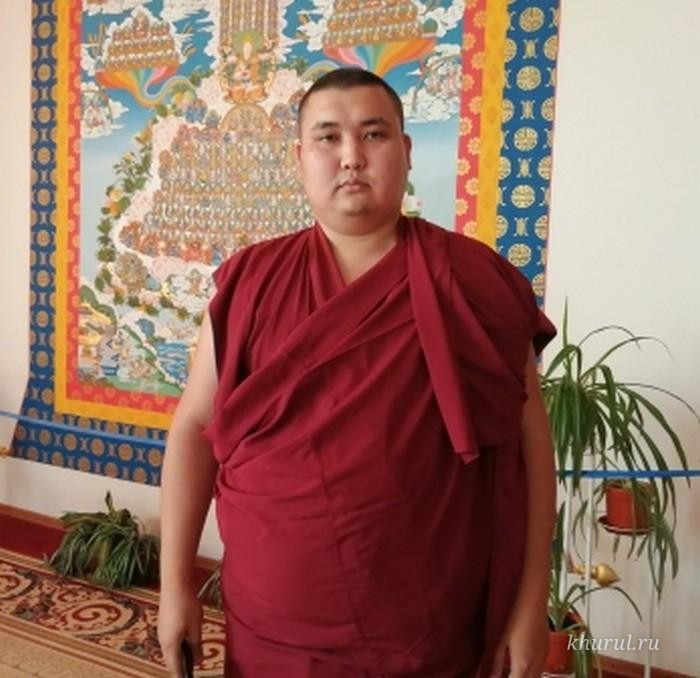
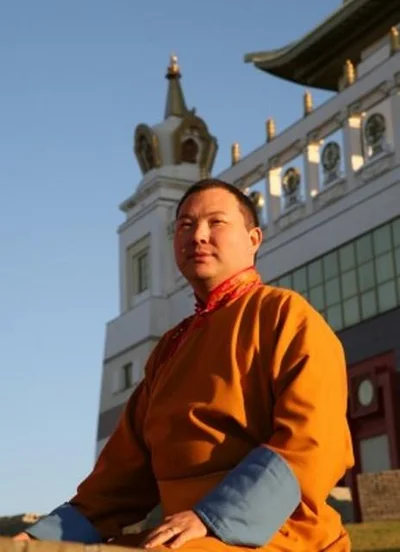
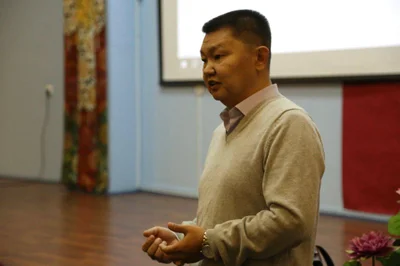
As part of the celebration of the Day of National Script, the administrator of the Central Khurul “The Golden Abode of Buddha Shakyamuni” Yonten Gelong shared his opinion on the significance and necessity of Todo Bichig. He also spoke about the khurul’s activity in popularizing the national script. — Gen Yonten, on September 5 Kalmykia celebrates the Day of the National Script Todo Bichig. The Shajin Lama of Kalmykia and the monastic community are among the few who congratulated the residents of the republic on this day. In this connection the question arises: what work is the Central Khurul carrying out in this direction? — The Central Khurul has for many years held free courses in the Kalmyk language for all who wish. Courses in the national script Todo Bichig are also organized. Together with the “Zayasn Bichig” foundation, calligraphy exhibitions are regularly held with the aim of popularizing the national script among young people and the rising generation. As the Shajin Lama of Kalmykia Telo Tulku Rinpoche has repeatedly said, the activity of the Central Khurul is directed not only at the revival of the Buddhist teaching, but also at the revival and support of Kalmyk culture, script, and language. Therefore one of the main directions of the khurul’s activity is precisely connected with the development of the language and script. — This year the Central Khurul of Kalmykia “The Golden Abode of Buddha Shakyamuni” turns 15. What events are planned to be held before the end of this year? — If we speak of our native Kalmyk language and script, then this year too we do not pass over this direction. For the 15th anniversary of the main temple of Kalmykia we announced the enrollment of participants for Kalmyk language courses. The announcement was made literally yesterday and over 100 people have already signed up. The courses will be taught by our well-known and respected teacher of the Kalmyk language, Candidate of Philological Sciences, associate professor at the B. B. Gorodovikov Kalmyk State University Sergey Nikolaevich Artaev. However, given the epidemiological situation, this year the classes will be held online. Also, the Ministry of Education and Science of the Republic of Kalmykia, together with the Center for the Development of the Kalmyk Language and with the support of the Central Khurul, has launched a competition in the traditional script Todo Bichig. The competition has two categories: calligraphy and drawing, and calligraphic copying of a text. In addition to the first three places in each of the categories, participants await two special prizes from the Shajin Lama of Kalmykia Telo Tulku Rinpoche and from me as a member of the Civic Chamber of Russia. We are carrying out a great deal of work translating texts from Todo Bichig into the modern script, first of all Buddhist literature. In the near future we are launching a series of books that will be called “The Heritage of the Kalmyk Lamas,” in which the pre-revolutionary works of our gelüngs will be published. The translation of the medium Lamrim is also nearing completion. And, finally, in October of this year we plan to publish a book with a list of the Kalmyk clergy of the early 20th century, since it was precisely the monks — the gelüngs — who made an enormous contribution to the development of the education of the people. A long, painstaking work was carried out by the scholar Bembya Shantaev. — Yonten Gelüng, in your opinion, how necessary is Todo Bichig for us today, in the 21st century? What is the significance of this script? — At the present moment our script is going through difficult times; indeed, we have few specialists left who know Todo Bichig, who are able to read and write it. But it is very important for us to preserve our script. First, it is our national identity; not many peoples in the world can boast of having their own script. There are about 6 thousand languages in the world, and only 200 of them have a script. Second, the existence of a script speaks of a high level of culture and education; moreover, a great deal of ancient knowledge left to us by our ancestors is preserved precisely in Todo Bichig. Much work has been done, but we still have very much to do. This is the rich heritage of our people, which we must not lose. — And a last question. What are the plans in the long term? I would not like to run ahead into the future, but I can say one thing. We will move forward, we make and will make every effort so that our native language, our script, our culture are preserved for many years to come. And here we hope for support, first of all, from our scholars, teachers, figures of culture and the arts, and the whole Kalmyk people.