On the History of the Zul Celebration
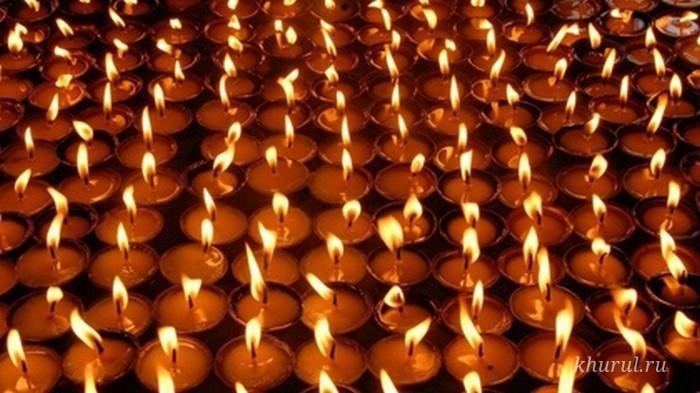
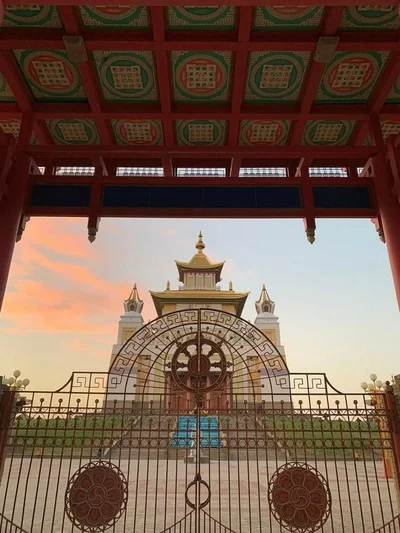
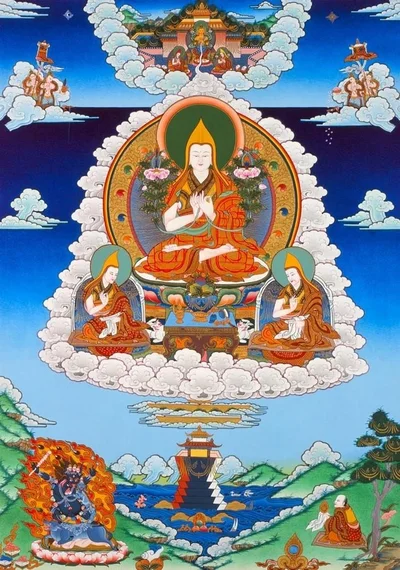
On December 10 the Buddhist holiday of Zul (Zul) will be observed. Since ancient times the Oirats (Kalmyks) have celebrated it as one of their most beloved holidays. The origin of this holiday is connected with the personality of the founder of the Gelug school of Buddhism in Tibet, Je Tsongkhapa (Bogd Zungkva, Etsk Zungkva, Zungkvan Gegän). The holiday is observed on the day Lama Tsongkhapa passed into parinirvana. In memory of this event, a thousand lamps (zul) are lit in the Buddhist monasteries of Tibet, India, Mongolia, and the Buddhist regions of Russia. As travelers note in their travel accounts, during the celebration of Zul the Kalmyk khuruls were literally ablaze with fire. When the Oirats adopted Buddhism, Zul came to be celebrated by our ancestors as well. The names of Buddhas and Bodhisattvas, of the great teachers and preachers of Buddhism, became their own for the Oirats, and they came to be venerated not only in the khuruls but also among the people. The name of Lama Tsongkhapa became special for them, and he was praised in songs. For example, there existed a special cycle of Kalmyk songs, “Öördin chastr” (Hymns of the Oirats). This cycle began with a song dedicated to Lama Tsongkhapa, “Etsk Zungkvan shajig” (The Religion of Father Tsongkhapa). In the 17th century the outstanding Oirat-Kalmyk enlightener Zaya Pandita translated from Tibetan the fundamental work of Je Tsongkhapa, the “Lamrim” (Bod' mörin zerg). Recently an Oirat text of the “Small Lamrim” by an unknown translator has also been found. All of this shows that among the Kalmyks a special cult of Tsongkhapa took root, and he was venerated on a par with the Buddha, being called the “Second Victorious One” (Khoyr duhar Yilhsn). It should be said that the folk roots of Zul were based on some pre-Buddhist holiday, or some special day on which people added to their age. According to a number of scholars, this is connected with the winter solstice; other researchers connect it with the transition to winter pastures, which is tied to the nomadic economy of the Kalmyks. In our view, an interweaving of pre-Buddhist elements with Buddhist ones took place, when the preachers united the winter holiday with the Day of Remembrance of Lama Tsongkhapa (the lighting of lamps), and the result was Zul. Kalmyk families prepared for this day in advance — they gathered grass (yörkg) in the steppe, dried it, cleaned the yurt, mended clothes, and the elders kept a fast (matsg). The day before the celebration the mistress of the household prepared dough for the lamps (nasna onhts), wrapping each blade of grass in cotton wool or clean sheep’s wool. At midday the head of the family carried these lamps to his ancestral khurul and lit them together with all the faithful. After the lamp went out, each person took his own lamp and carried it home. After this it was baked in the ashes. In the morning, following the mother’s words “Nasan bulaldtn!” (Take apart your years!), the members of the family took apart the baked pieces of dough and ate them with butter. This meant that each member of the family had partaken of consecrated food and that in the coming year good fortune would accompany him. In every yurt (now in every house) the traditional greeting rang out: “Avsn nasntn ölzätä boltkha!” (May your years be happy!). Badma Menyaev, head of the museum of the Central Khurul, research fellow of Kalmyk State University