Interview with the Shajin Lama of Kalmykia on Current Issues
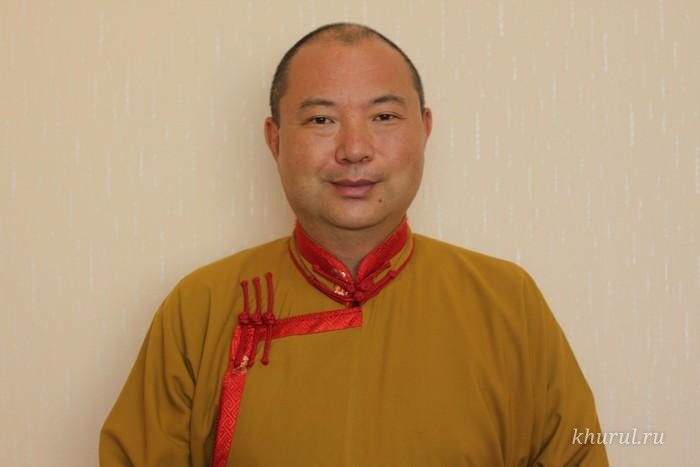
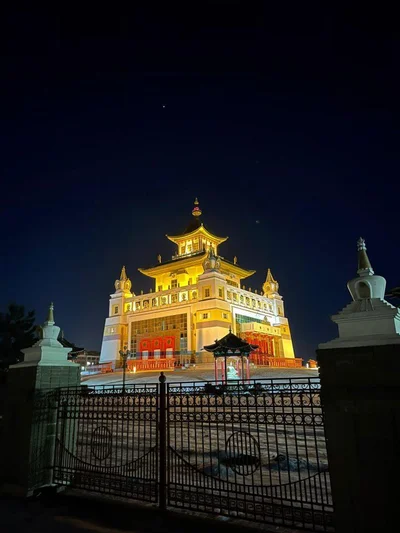
The Central Khurul “The Golden Abode of Buddha Shakyamuni” is beginning a series of interviews with the Shajin Lama of Kalmykia, Honorary Representative of His Holiness the 14th Dalai Lama in Russia, Mongolia, and the CIS countries, Telo Tulku Rinpoche, on the most pressing issues.
— Rinpoche la, good afternoon! Please tell us, what is the situation with the development of Buddhism in Kalmykia, in Russia? What is lacking? What needs attention? What is your view on the development of Buddhism in Russia as a whole?
Good afternoon! The development of Buddhism in Russia as a whole is proceeding at a very rapid pace, not only in Kalmykia, but also in Buryatia and Tuva. I never tire of repeating that the development of Buddhism is not reduced to the number of sacred objects, the number of new temples and new stupas that we erect. In my understanding, the development of Buddhism is the development of our mind, the increase of the existing knowledge in the field of Buddhism. Today we have enough sacred structures, enough Buddhist temples and stupas, as well as other sacred objects. Of course, it would be good to build more, but I believe that at this moment something else is more important: we still lack specialists — monks and nuns. For example, right now there are very few nuns in Russia. Moreover, we need not only monks and nuns. We also need other specialists, representatives of the humanities and natural sciences. We need more historians. In my opinion, this is precisely what we need to pay attention to. We need to find a way to expand the training of personnel, of specialists. I think this is one of the key components that we lack.
Of course, the situation is different in different Buddhist regions. In this case I am proceeding from the circumstances that have developed in Kalmykia. Geographically, Kalmykia is located very far from Asia. We are in Europe. For many centuries we have lived in the European part of Russia. If you look at the northern, eastern, and western borders of Kalmykia, we are neighbors with non-Buddhist regions. To the south we also border non-Buddhist regions. Be that as it may, we have preserved our unique heritage, our identity, for many centuries, far from the place where our people originated.
For this reason, we must find ways to nurture more specialists who will help preserve our identity and our unique heritage.
On the whole, we observe a steady development of Buddhism. However, I always say that development has no limits, we will always move forward. The key question we need to resolve at this moment is the number of specialists who cooperate with us. I believe it is very important for us to find a way to increase the number of specialists in the field of Buddhism, and these should be specialists not only in spiritual matters, that is, monks and nuns, but also representatives of academic science, including experts in the sphere of technical sciences and technologies.