Buddhists of Kalmykia: “Receiving the Dalai Lama Is Our Constitutional Right”
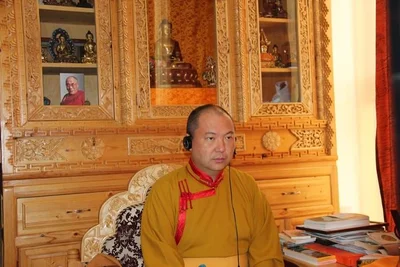
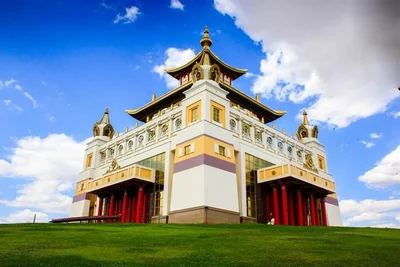
The Ministry of Foreign Affairs of the Russian Federation has responded to the letter from the Association of Buddhists of Kalmykia requesting assistance in carrying out a pastoral visit to Russia by the spiritual leader of Russian Buddhists, His Holiness the 14th Dalai Lama, who this year is marking his 85th birthday, the RIA Novosti agency reported on Monday. Citing the Treaty of Good-Neighborliness, Friendship, and Cooperation between the Russian Federation and the People’s Republic of China of July 16, 2001, the foreign policy agency informed the Russian Buddhists that “Russia and China build their relations on the principles of non-interference in each other’s internal affairs.” “Under the treaty, the parties assumed obligations to provide mutual support on matters concerning the protection of state unity and territorial integrity. At present, the Chinese authorities assess extremely negatively the activities of the 14th Dalai Lama, which, in their opinion, directly harm China’s sovereignty,” states the letter signed by the deputy director of the First Asian Department, M. Baranov. In conclusion of its response, addressed to the vice-president of the Association of Buddhists of Kalmykia A. A. Khartskhaev, the foreign policy agency assures the Russian Buddhists that it understands their “desire to facilitate the arrival of the spiritual leader of the Buddhists in the Russian Federation” and expresses hope that “the normalization of his (the Dalai Lama’s) relations with the leadership of the PRC will make it possible to arrange such a pastoral trip in the foreseeable future.” As the senior administrator of Kalmykia’s main Buddhist temple, a member of the Public Chamber of the Russian Federation, Yonten Gelong (secular name Sergei Kirishov), who last month approached the Public Chamber with a request for assistance in arranging a pastoral visit by His Holiness the 14th Dalai Lama to Russia, reported, “the response from the Ministry of Foreign Affairs provoked a wave of indignation.” “Once again the Buddhists of Kalmykia and Russia cannot exercise their constitutional right to practice their chosen religion because of the biased viewpoint of another state. Once again the interests of China turn out to be above the interests of Russians,” noted Yonten Gelong. Good-neighborliness, friendship, and cooperation. According to the assistant to the supreme lama of Kalmykia Telo Tulku Rinpoche, Khongor Elbikov, the response of the Russian foreign policy agency raises many questions. “In declining the request of the Russian Buddhists, M. Baranov refers to the Treaty of Good-Neighborliness, Friendship, and Cooperation between the Russian Federation and the People’s Republic of China — a document adopted back in 2001. However, the last visit of His Holiness the Dalai Lama to Kalmykia took place in November–December 2004, that is, already after the conclusion of this treaty, and it evidently did not worsen relations between the two countries in the slightest,” Khongor Elbikov said. According to the assistant to the supreme lama of Kalmykia, the Ministry of Foreign Affairs even thanked the Kalmyk Buddhists for observing all the recommendations addressed to them ahead of the visit of the supreme Buddhist hierarch. “Why in 2004 did the Treaty of Good-Neighborliness, Friendship, and Cooperation not serve as an obstacle to the visit of the spiritual leader of Russian Buddhists to Kalmykia, but now has become the main stumbling block?” asks Khongor Elbikov. The senior administrator of Kalmykia’s main Buddhist temple, a member of the Public Chamber of the Russian Federation, Yonten Gelong, suggests that the foreign policy agency pay attention to Article 18 of the treaty. “If we are going to refer to this treaty, then we should carefully read its Article 18, which says that ‘the Contracting Parties shall cooperate in promoting the exercise of human rights and fundamental freedoms in accordance with their international obligations and the national legislation of each of them,’” Yonten Gelong quoted the treaty, adding that the Constitution of the Russian Federation guarantees Russian citizens “the right to freely choose, hold, and disseminate religious and other beliefs and to act in accordance with them.” China, on the contrary, should thus “assist Russia in ensuring that Russian Buddhists have the opportunity to freely and fully practice their religion,” which is impossible without the active participation of His Holiness the Dalai Lama, who for many centuries has been the spiritual teacher of the residents of Russia’s Buddhist regions, the member of the Public Chamber of the Russian Federation believes. The Dalai Lama’s visit to Russia is especially important for the Buddhist regions. According to Yonten Gelong, the visit of His Holiness the Dalai Lama is very important for all Russian Buddhists, of whom there are more than a million in Russia, but especially for the residents of the traditional Buddhist regions. “His Holiness the Dalai Lama is our spiritual leader and an indisputable authority in the field of the Buddhist teaching, and it is very important for Buddhists to hear instructions from his lips. Over the years of the revival of Buddhism in Russia, very many questions and contentious points have accumulated that need to be clarified. Information about Buddhism today comes from various sources, and without the instructions of an experienced teacher it is sometimes very difficult for Buddhists to make sense of it. This is one of the main reasons why we want to invite His Holiness the Dalai Lama to Russia,” Yonten Gelong explained. Guided by the desire to broaden and deepen their knowledge of Buddhist philosophy, since 2009 Russian Buddhists have begun asking His Holiness the Dalai Lama to bestow teachings on them outside Russia — in India and in neighboring Latvia. The teachings of the spiritual leader for the Buddhists of Russia have become the most vivid event in the life of the followers of Buddhism, both from the traditional Buddhist regions and from major Russian cities. As a rule, up to fifteen hundred followers of the Dalai Lama gather for such teachings in India, and over four thousand in Latvia. “This is, without a doubt, a lot,” says Khongor Elbikov, “but one must not forget that most of the population of the Buddhist regions are people of modest means. Many of them cannot afford trips abroad. They have every right to meet with the teacher on their native soil.” “Traveling the world, His Holiness the Dalai Lama promotes universal human values, friendship among peoples, and harmony among religions. This is what unites any state. One must look at things correctly: the Dalai Lama’s visit to Russia is help, not a hindrance,” says the assistant to the supreme lama. Carbon-copy responses. His Holiness the 14th Dalai Lama visited the Soviet Union and Russia eight times: in 1979, 1982, 1986, 1991, 1992, 1994, 1996, and 2004. His Holiness the Dalai Lama came to our country three times during the Soviet period — in 1979, 1982, and 1986; later, in 1991 and 1992, he visited the traditional Buddhist republics: Buryatia and the Agin-Buryat Autonomous Okrug, Tyva, and Kalmykia. In 1994 he again visited Moscow, and in 1996 he visited Moscow on the way to Mongolia. In November 2004, after a ten-year break, His Holiness arrived for a short pastoral visit to the Buddhist Republic of Kalmykia. Despite numerous appeals by Buddhist organizations to the Ministry of Foreign Affairs of the Russian Federation, His Holiness the Dalai Lama has not had the opportunity to visit Kalmykia since 2004, and Buryatia, Zabaykalye, and Tyva since 1992. After the memorable visit of the spiritual leader to Kalmykia in 2004, following which, with his direct participation, the largest Buddhist temple in Europe, “The Golden Abode of Buddha Shakyamuni,” was built in the republic, the Association of Buddhists of Kalmykia annually sends letters to the Ministry of Foreign Affairs of the Russian Federation requesting new visits. Each year the leadership of the Association of Buddhists of Kalmykia carefully considers the wording and offers new arguments to explain the pressing need for a visit by His Holiness the Dalai Lama to Russia. This year, for example, Kalmykia is celebrating an anniversary date — the 100th anniversary of its autonomy. In addition, it is the 15th anniversary of the opening of Kalmykia’s main temple, “The Golden Abode of Buddha Shakyamuni,” which, together with many other temples, stupas, and statues, still remains unconsecrated in the Dalai Lama’s absence. As stated on the website of “The Golden Abode of Buddha Shakyamuni,” “the main temple of Kalmykia today is one of the major spiritual and educational centers for the development of Buddhism in Russia. Hundreds of people turn to the temple daily for spiritual guidance and support; thousands of believers come here on the days of major services. All-Russian and international Buddhist conferences and forums; interreligious councils; lectures for believers; charity events; free Kalmyk language courses; exhibitions by Kalmyk, Russian, and foreign artists and photographers; screenings of documentary and feature films about Buddhism are held here. Numerous pilgrims from various regions of Russia and from abroad flock here, as well as tourists of various faiths and social status.” The temple was built on a site blessed by His Holiness the Dalai Lama and, on his instruction, is surrounded by statues of the seventeen greatest Buddhist teachers (pandits) of ancient India (Nagarjuna, Aryadeva, Dharmakirti, Shantideva, and others), who transmitted priceless Buddhist knowledge to the Tibetans, and through them to the Mongols and the residents of Russia’s Buddhist regions. His Holiness the Dalai Lama has repeatedly spoken of the uniqueness of the Kalmyk temple and expressed a desire to “make a pilgrimage” to the statues of the great Buddhist teachers. When the supreme spiritual hierarch speaks of his desire to make a pilgrimage to a small Buddhist republic, for the residents of the region this sounds like the highest appraisal of the region’s efforts to revive Buddhism, which was mercilessly destroyed in the last century together with the Kalmyk lamas, khuruls (temples), and stupas. This year, according to the representative of His Holiness the Dalai Lama in Russia, Mongolia, and the CIS countries, Telo Tulku Rinpoche, the spiritual leader, despite his advanced age and the minimization of trips abroad, unambiguously voiced his desire to meet with his Russian followers. What are the Kalmyk Buddhists to think, hearing such words from their spiritual teacher and not having the slightest opportunity to carry out his will? However, no matter what arguments Russian Buddhists put forward in their correspondence with the Ministry of Foreign Affairs, no matter how carefully they hone their wording, the responses of the foreign policy agency are striking in their monotony. “If one compares, for example, the responses received by the ABK from the Russian Ministry of Foreign Affairs in 2013 and 2018,” says the assistant to the supreme lama of Kalmykia Telo Tulku Rinpoche, Khongor Elbikov, “one gets the impression that they were written from the same template. They are signed by officials of different ranks, but from year to year the letters echo the same words: ‘we relate with understanding,’ ‘we hope that in the foreseeable future…’ Almost 16 years have passed since the teacher’s arrival in Kalmykia in 2004, and we continue to receive such responses.” “The issue is not being resolved, no one is delving into the essence of this problem,” concludes Khongor Elbikov. Invented dangers. If one nevertheless takes the trouble to delve into the essence of this problem, which is acute for Russian Buddhists, it immediately becomes clear that already in 2001, when the notorious Treaty of Good-Neighborliness, Friendship, and Cooperation between the Russian Federation and the People’s Republic of China was concluded, His Holiness the Dalai Lama began gradually withdrawing from the political leadership of the Tibetan people. All political matters, including those concerning the many years of discussions with the leadership of the PRC on the status of Tibet, were from that time led by the prime minister of the Central Tibetan Administration (CTA), the Venerable Samdhong Rinpoche. His Holiness the Dalai Lama gained the opportunity to devote more attention to matters of a spiritual nature, saying that from then on he was “half retired.” In 2011 he fully relinquished his political powers, transferring them to the head of the CTA elected by the Tibetan people, Lobsang Sangay. Interestingly, the spiritual leader, currently residing in his fourteenth incarnation, renounced political activity not only in his present birth but completely severed the connection between the institution of the Dalai Lama and the political leadership of Tibet. From now on he is exclusively the spiritual leader of the numerous followers of Tibetan Buddhism, among whom are the residents of Russia’s four traditional Buddhist regions. This information is well known both to the leadership of China and to the Ministry of Foreign Affairs of Russia, and therefore the appeal to the harm that the Dalai Lama’s visit to Kalmykia could allegedly cause to China’s territorial sovereignty sounds, in the responses of the Russian foreign policy agency, like a brush-off. What does the visit of an outstanding spiritual leader and Nobel Peace Prize laureate to a small steppe republic in the south of Russia have to do with the territorial integrity of a huge state? Why, in 2004, when the Dalai Lama shared Buddhist knowledge with the people of Kalmykia, did no one see any threat in it? The Great Wall of China did not waver; everything remained exactly as before. “The visit of His Holiness the Dalai Lama to Russia poses absolutely no danger to the sovereignty or territorial integrity of the People’s Republic of China,” believes the senior administrator of Kalmykia’s main Buddhist temple, a member of the Public Chamber of the Russian Federation, Yonten Gelong. “All these years, while we await a positive decision from the Russian Ministry of Foreign Affairs, His Holiness travels across countries and continents, bringing people a message of love and compassion, giving them hope. These trips, as we can see, in no way undermine China’s position.” “These are all invented dangers, and because of excessive attention to them we, the Buddhists of Kalmykia and all of Russia, ultimately suffer,” Yonten Gelong sums up. What is to be done? “In order to change the situation,” Yonten Gelong believes, “both our Ministry of Foreign Affairs and the People’s Republic of China need to understand it as well as possible.” Since this concerns the vital interests of Russia’s followers of Buddhism — one of the four officially recognized faiths of the Russian Federation — the Buddhists, in the opinion of the senior administrator of Kalmykia’s main temple, should have a say in this matter. Since correspondence brings no results, a constructive dialogue is needed — outdated formulations must be discarded and an effort made to find a way out. “We would like the question of the pressing need for the Dalai Lama’s visit to Russia to become, in the very near future, a subject of discussion between the Ministry of Foreign Affairs of the Russian Federation and the People’s Republic of China,” says Yonten Gelong. “And we want to take part in such negotiations in order to convince the leadership of China that His Holiness the Dalai Lama poses no threat to its territorial integrity, and the Ministry of Foreign Affairs of the Russian Federation that receiving the Dalai Lama is our constitutional right.” Yulia Zhironkina. Source: The Center for Tibetan Culture and Information “Save Tibet”